CCLP
From an operator who runs the houses.

3 filters at the front. 5 habits at the back. A community at the center.

That's the operating model. It's what decides whether a coliving property cash flows. It's what holds 95% modal occupancy and two-year average resident stays.

The page below walks what runs the model, the four doors in around it, and how to find the path that fits you in five minutes.

Why this exists

A few years ago I sat across from an investor who had twelve rental properties and hated every single one of them. Vacancy. Turnover. Tenants who trashed the place. Calls at midnight about a broken toilet. He looked at me and said, "I thought this was supposed to be passive income."

I told him what I'm about to tell you.

It isn't passive. But it doesn't have to be chaos either. There's a way to run a single-family house with four adults sharing it where the people who live there actually want to stay, where you fill vacancies in days instead of months, and where the cash flow lands every month because the systems underneath you are doing the work. That's coliving when you run it clean.

The investor across the table hadn't been taught any of it. The standard rental playbook doesn't cover any of it. There's a different playbook. The rest of this page walks through what's in it, who it's for, and where to find your path.

The operating method

What makes a coliving property cash flow is whether the people in the house actually want to stay.

Retention is the cash flow. Vacancy is the bleed. The spreadsheet math is downstream of that.

Front of the funnel

Three filters decide whether a house can even hold the model.

  • Zoning. Whether the unrelated-adults occupancy clause lets four-plus adults legally share the house, and whether local enforcement is consistent with what the code says.
  • Rent comps. Coliving rent is rent-by-the-room, not single-family. Compare the wrong way and you're underwriting on assumptions you can't trust.
  • Floor plan and operations. Bedrooms private and roughly equivalent. Common space that holds four people sharing. A kitchen that handles four meals at staggered times.
Miss any one of them and you've got a $20,000 to $50,000 mistake before you even close.
Back of the funnel

Five operational habits decide whether the people you put in the house actually stay.

  • Listing copy that pre-screens for community fit.
  • A 90-second video tour that closes on the right tenant.
  • A screening question that surfaces month-four-stay risk in a single beat.
  • A monthly two-hour rhythm that catches what's drifting before it costs real money.
  • A clean move-out SOP that produces the next vacancy's referral pipeline.
The math everyone runs assumes all eight pieces are working. Most operators are missing at least one filter on the way in and at least two habits on the way out. That's where the cash flow disappears.
One habit, in action.

Most coliving listings read like a standard rental.

Standard rental copy

"Private bedroom, $850 a month, utilities included."

A listing like that pulls every applicant in your zip code and your screening pile fills up with people who are going to ghost you, fight the house, or move out at month three.
Same room. Same price. Different listing.

"Private bedroom in a four-person community house. $850 includes utilities, fast WiFi, and weekly cleaning of the shared spaces. We're a quiet weeknight house and a social Saturday. Tour videos at the link."

The version that holds is written to attract the right person and quietly tell the wrong one to keep scrolling. The wrong tenant reads that and moves on. The right tenant books the tour already half-decided.

That one shift in listing copy alone cuts your time-to-fill in half on most properties. There are four more habits like it on the back end and three filters like it at the front.

Which is why the spreadsheet promised $3,000 a month and the property is producing $1,400.
Three filters at the front. Five habits at the back. A community at the center. That's the model.
The numbers

Properties running the model typically hit these numbers. Not a projection. What the properties have produced.

Modal occupancy
95%
Resident stays
2yr average
Cash flow / property
$2.5– 4K / mo
Time to fill a vacancy
7– 10 days
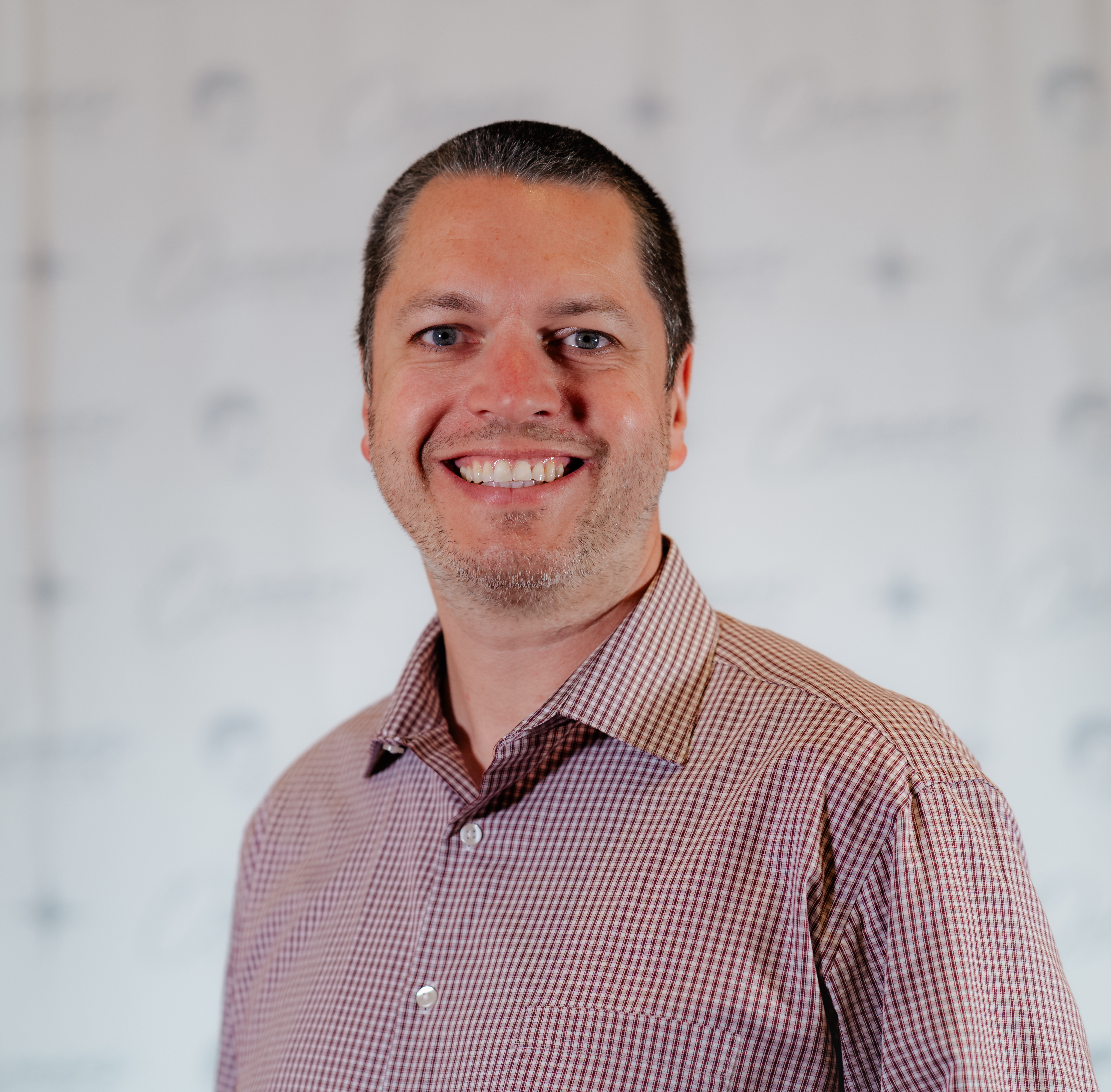
David Ross
FOUNDER CCLP OPERATOR Running houses
The operator behind it

The method comes from running the houses.

I'm David Ross.

I run coliving houses. I bought my first one to test whether the model worked the way I thought it worked. It did. I built the SOPs because I needed them to hold the numbers across more than one property. The SOPs became the basis for what we teach because other operators kept asking me how I held them.

Most operators I talk to who tried coliving and stalled didn't run into the wall on acquisition. The deal closed fine. The cash flow disappeared between rent-ready and month four. That's the part of the work that goes underexplained almost everywhere else, and it's the part of the work CCLP is built around.

When I set up CCLP I built it the way I'd want it built if I were on the other side. Operators getting trained come in one door. Property owners who need somebody competent to run a house come in another. We connect them in their geography and we share in what the property produces from there.

My share comes from cash flow. If the cash flow doesn't show up, neither does my share. That's the structure I wanted because it's the only structure I'd want to be on the other side of.
Agent Studio

The same agents I run on every deal.

The method is the knowledge. Agent Studio is what turns the knowledge into the work. It's what I actually use to run the filters on a property, hold the habits across a portfolio, and keep the math straight on every deal. I built it the same way I built the SOPs. Because I needed it.

You give it a property. What comes back is what I'd pull back if I were doing it by hand. What the zoning lets you do, what the rents look like by the room, where the demand actually is, who fits the house, what's worth pausing on.

One read of the property, not three separate runs you'd have to stitch together yourself. That's the property intelligence Agent Studio leads with.

That intelligence doesn't sit as a static report. It pre-fills the underwriting with the assumptions the data supports, and you edit them as you learn more about the deal. Where something's uncertain, you can assign a deeper agent to do the deeper work. The studio remembers what was checked, what changed, and what the next move is.

Agent Studio comes with the partnerships, not on its own. The partners are the ones running it on real deals, and that's how the work stays calibrated. What's included with each door is on the cascade pages.
See Agent Studio
The shape of it

Here's how I think about what we offer.

The Coliving Field Guide is the knowledge base. The operating method on this page, written out at depth, with the templates I use on the actual operations. It's the book on the shelf you keep coming back to. Anyone serious about coliving should have it.

The operator partnerships are the knowledge base plus the hands-on work. You step into the network. You get the deeper toolkit. You get me, at the depth that matches the door you came through.

You don't buy training. You step into the way I run the work, and we run it together.

The property owner partnership is the other side. You bring the property. We bring the operator and the toolkit. We share in what the property produces from there.

Four doors. Each one is a way into the same work.

The four doors

The four doors into the work.

If you're coliving-curious and want the operating method on the shelf before you decide.

The Coliving Field Guide

The full method written out. Eighteen guides covering the three filters at acquisition depth, the five habits at operations depth, the templates I use on the actual operations. Monthly group Q&As where I answer questions live. What you pay for the Field Guide applies in full as credit if you step into one of the operator paths within twelve months.

Get the Coliving Field Guide
If you're going to run the resident side professionally and you want the network feeding you properties.

The CCLP PM Partner Program

Six months of preparation at full operator depth. The full Resident Lifecycle. The property management work as the spine. Then you step into the network as property owners come to CCLP looking for trained operators in their geography. You manage. You earn. We share in what you produce. Application, interview, cohort entry. A limited number of partners per cohort to keep placement quality high.

Apply to be a PM Partner
If you have capital and time and you want me hands-on as your partner on a specific deal.

Done-With-You

Weekly calibration calls with me on your specific deal. Market read. Underwriting review. Remodel scope review before you commit the budget. Screening calls together when you ask. The Full Agent Studio throughout. I roll off when you're ready to run the property without me. A small number of partners at a time, because the calls are with me, not with a coach.

Apply to be a Done-With-You partner
If you have a coliving property and you need somebody competent to run it.

Property Owner partnership

Walkthrough on the property. Underwriting review against my coliving rent-by-the-room dataset. Then we connect you with a trained operator from our network in your geography, with the AI tools to run zoning, rent comps, listing, and screening at speed. Partnership terms tailored to the specific property and the specific operator. We match for quality, not for volume.

Schedule a call about your property

Not sure which door is yours? Five questions, five minutes.

Take the path-fit assessment
Live · Resident-side

The Finding Tenants Workshop

How we hold 95% modal occupancy and two-year average resident stays.

I'm running a free live workshop. 45 minutes walking the operating method we use to fill vacancies in days instead of months and hold residents past the two-year mark, plus 10 minutes on the partnership paths if you want to take the work further than the playbook covers, plus 15 to 20 minutes of live Q&A.

After the teach and the offer segment I open it up for live Q&A on whatever's stuck in your specific market. Your screening question. Your move-out question. Your property at $1,400 instead of $3,000. Bring it.

When you register you'll also get the Finding Tenants Playbook after the session. The playbook is the long-form reference that maps the method step by step so you have it as a working document for your own properties. No second opt-in. Workshop registration sends both.

Why this is the first thing I want you to do: The reason I'm pointing you here first is so you can see whether the depth is real before you spend money on any of the doors above. If the workshop holds up, the rest of CCLP is built at that depth. If it doesn't, no harm done.
The whole point

This country is getting lonelier every year.

Single-family houses that used to hold three generations now hold one person. Apartment buildings where nobody knows the neighbor's name. Coliving exists because people were made to live with other people, and the housing stock has stopped offering that by default.

Years running coliving houses, we've held 95% modal occupancy and two-year average stays. The reason the numbers hold is that residents actually want to stay. The job, by the time anyone finishes working through CCLP, is to build a house residents want to stay in.

That's the whole point.

We only get paid when you get paid because we wouldn't have built CCLP any other way.